Name days on July 2
None of the saints of this day carries a name in common use, so there are no widely kept name days on July 2.
Saints and feasts of July 2
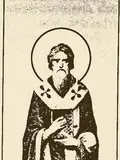
Juvenaly of Jerusalem
Hierarch, Ιουβενάλιος
St. Juvenaly was Patriarch of Jerusalem in the fifth century, shepherding the Holy City for several decades during the great christological controversies. He took part in the Third Ecumenical Council at Ephesus and the Fourth at Chalcedon, standing with the Orthodox faith in Christ, and during his episcopate the see of Jerusalem was honored as a patriarchate.
Deposition of the Robe of the Theotokos
Saint, Κατάθεσις Τιμίας Εσθήτος Θεοτόκου
This feast commemorates the placing of the precious Robe of the Most Holy Theotokos in the church of Blachernae in Constantinople during the fifth century, in the reign of Emperor Leo the Great. Tradition relates that the Robe had been kept by pious Christians in the Holy Land before being brought to the imperial city.
John Maximovitch of San Francisco
Hierarch, Ιωάννης Μαξίμοβιτς
St. John (Maximovitch) was born in Russia in 1896 and served as a bishop of the Russian Church abroad in Shanghai, Western Europe and finally San Francisco, where he reposed in 1966. He was renowned for his severe asceticism, ceaseless prayer and care for orphans and the poor.
Lambros the New Martyr of Samothrace
Martyr, Λάμπρος ο Νεομάρτυς
St. Lambros was one of the New Martyrs of Samothrace who confessed Christ before the Ottoman authorities in the nineteenth century. Tradition relates that he was put to death for refusing to deny his faith.
Kointos the Confessor
Saint, Κόιντος ο Ομολογητής
St. Kointos (Quintus) was a Christian of Phrygia in the third century who gave alms generously and was known for healing the sick. Brought before the pagan authorities, he confessed Christ and was tortured, but survived his sufferings.
Photios of Moscow
Hierarch, Φώτιος Μόσχας
St. Photios was a monk from Monemvasia in the Peloponnese who was appointed Metropolitan of Kiev and All Russia in the early fifteenth century. He labored to restore church order and defended the Church against heresies and disorder.
Stephen the Great of Moldavia
Saint, Στέφανος ο Μέγας
St. Stephen the Great ruled Moldavia from 1457 and defended his Orthodox land for decades against invading armies. He built and endowed many churches and monasteries, including on Mount Athos, in thanksgiving for his victories.
The calendar, on your phone each morning
Today’s saints, whether it is a fast day, and the people in your contacts who have a name day. Free, with no ads.