Name days on September 10
Pulcheria, Menodora, Minodora, Metrodora, Mitrodora, Nymphodora, Nymfodora, Nimfodora
Saints and feasts of September 10
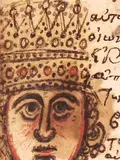
Pulcheria
Holy Woman, Πουλχερία
St. Pulcheria was a Byzantine empress of the fifth century, sister of the Emperor Theodosius II. She took a vow of virginity, guided the empire with wisdom and piety, and was a steadfast defender of the Orthodox faith, laboring for the Fourth Ecumenical Council at Chalcedon which confessed Christ as true God and true man.
Name days: Pulcheria
Menodora, Metrodora and Nymphodora
Holy Woman, Μηνοδώρα, Μητροδώρα και Νυμφοδώρα
The holy virgins Menodora, Metrodora and Nymphodora were sisters of Bithynia who withdrew to a solitary place near the hot springs of Pythia to live in prayer and virginity. Denounced to the governor Fronto in the persecution of the early fourth century, they were tortured one after another before each other's eyes and put to death, refusing to deny Christ.
Name days: Menodora, Minodora, Metrodora, Mitrodora, Nymphodora, Nymfodora, Nimfodora
Barypsabas the Martyr
Martyr, Βαρυψάβας
St. Barypsabas was a hermit of the East who, tradition relates, was entrusted with a vessel containing the precious blood of the Savior gathered at the Crucifixion, by which many miracles of healing were worked. He carried it to Dalmatia, where he was killed by robbers for its sake.
Peter and Paul of Nicaea
Hierarch, Πέτρος και Παύλος Νικαίας
St. Peter was bishop of Nicaea in the ninth century and suffered for the veneration of the holy icons under the iconoclast emperors, standing firm as a confessor. St. Paul, likewise bishop of Nicaea, is remembered for his holy life and his defense of Orthodoxy.
Apelles, Luke and Clement the Apostles
Apostle, Απελλής, Λουκάς και Κλήμης
The holy apostles Apelles, Luke and Clement are numbered among the Seventy. Apelles, whom the Apostle Paul calls approved in Christ, is said to have been bishop of Heraclea; Luke, or Lucius, kinsman of Paul, bishop of Laodicea in Syria; and Clement, whose name Paul writes is in the book of life, bishop of Sardis.
Isaiah of Kykkos
Venerable, Ησαΐας ο Κύκκου
St. Isaiah was a hermit of the Troodos mountains of Cyprus in the eleventh century. Tradition relates that the Byzantine governor Manuel Boutomites, healed through his prayers, obtained for him from the emperor Alexios Komnenos the icon of the Theotokos painted by St. Luke, around which he founded the monastery of Kykkos.
The calendar, on your phone each morning
Today’s saints, whether it is a fast day, and the people in your contacts who have a name day. Free, with no ads.