Name days on March 1
Eudokia, Eudocia, Efthokia, Docia, Evdokia, Antonina, Domnina, Paraskevas, Paraskeuas, Markellos, Marcellus, Marcel, Charisios, Harisios, Charisius
Saints and feasts of March 1
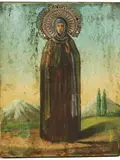
Eudokia
Holy Woman, Ευδοκία
St. Eudokia was a Samaritan of Heliopolis in Phoenicia who lived in the early centuries of the Church. Wealthy and famed for her beauty, she was moved to repentance by the words of a monk named Germanos, was baptized, gave her riches to the poor, and entered the monastic life, excelling in fasting and prayer.
Antonina of Nicaea
Holy Woman, Αντωνίνα
St. Antonina was a Christian woman of Nicaea in Bithynia who suffered during the persecutions of the early fourth century. Brought before the governor for refusing to sacrifice to idols, she was subjected to torture and imprisonment, and tradition relates that she was finally sewn into a sack and cast into a lake.
Name days: Antonina
Domnina the New
Holy Woman, Δομνίνα
St. Domnina the New was an ascetic of Syria in the fifth century, known from the writings of Theodoret of Cyrrhus. She lived in a small hut of reeds in her mother's garden, spending her days in prayer and tears, eating only lentils and wearing a rough garment that hid her face.
Name days: Domnina
Paraskevas of Trebizond
Martyr, Παρασκευάς
St. Paraskevas was a Christian of Trebizond on the Black Sea who lived under Ottoman rule. Tradition relates that he was falsely accused before the Turkish authorities and pressed to deny his faith, but refused every inducement and threat.
Name days: Paraskevas, Paraskeuas
Markellos and Antonios of Syria
Martyr, Μάρκελλος
Sts. Markellos and Antonios were martyrs of Syria whose memory the synaxaria preserve with few details. Tradition relates that they confessed Christ before the pagan authorities and, refusing to renounce Him, were cast into fire and so received the crown of martyrdom.
Charisios, Nikephoros and Agapios
Martyr, Χαρίσιος
Sts. Charisios, Nikephoros and Agapios were martyrs of the early Church whose names are preserved in the Greek synaxaria for March 1. Tradition relates that they were put to the sword for their confession of Christ.
David of Wales
Hierarch, Δαβίδ της Ουαλίας
St. David (Dewi) was a bishop of the sixth century in Wales, the founder of the monastery at Menevia (now St. Davids) and the most celebrated of the Welsh saints. Tradition relates that he lived with great austerity, drinking only water and laboring with his monks in the fields, and that he preached with such power at the Synod of Brefi that he was acknowledged as chief among the bishops of Wales.
The calendar, on your phone each morning
Today’s saints, whether it is a fast day, and the people in your contacts who have a name day. Free, with no ads.