Name days on March 28
Hilarion, Ilarion, Irodion, Herodion, Rodion
Saints and feasts of March 28
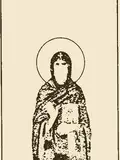
Hilarion the New
Venerable, Ιλαρίων
St. Hilarion the New was abbot of the monastery of Pelekete in Asia Minor during the age of iconoclasm. A man of fasting, vigil, and deep humility, he guided his brotherhood in the monastic life and stood firm in the veneration of the holy icons when the emperors sought to abolish it.
Herodion the Apostle
Apostle, Ηρωδίων
St. Herodion was one of the Seventy Apostles, greeted by St. Paul as his kinsman in the Epistle to the Romans. Tradition relates that he was made Bishop of Neopatras in Greece, where he suffered much from the pagans, and that he later accompanied St. Peter to Rome and was martyred there.
Gabrielia of Leros
Holy Woman, Γαβριηλία
St. Gabrielia was born Avrilia Papayianni in Constantinople in 1897 and trained as a physiotherapist in England. After the death of her mother she gave away everything and went to India, where she cared for lepers and the poor for years, and later was tonsured a nun in Jerusalem, living a life of hidden service in Greece, Africa, Europe and America.
Stephen the Wonderworker
Venerable, Στέφανος ο Θαυματουργός
St. Stephen the Wonderworker is a venerable father whom the Greek synaxaria commemorate on March 28 with the note that he reposed in peace. Nothing further of his life has been preserved.
Eustratios of the Kiev Caves
Martyr, Ευστράτιος ο Νηστευτής
St. Eustratios was a monk of the Kiev Caves who was taken captive by the Cumans in 1096 and sold as a slave to a Jew of Cherson. Tradition relates that his master starved his captives to force them to renounce Christ, and that Eustratios, who alone survived because of his long practice of fasting, was crucified on the day of Pascha.
Hesychios of Jerusalem
Venerable, Ησύχιος ο Ιεροσολυμίτης
St. Hesychios was a presbyter of Jerusalem in the fifth century, a disciple according to tradition of St. Gregory the Theologian, and a renowned teacher and interpreter of Scripture. Writings on watchfulness and prayer attributed to Hesychios are included in the Philokalia and have been read by monastics through the centuries.
Boyan of Bulgaria
Martyr, Βογιάν Ενραβωτάς
St. Boyan, called Enravota, was the eldest son of the Bulgarian khan Omurtag in the ninth century. Converted to Christ through a Byzantine captive, he was disinherited and, when he refused to renounce the faith, was beheaded on the order of his brother, the khan Malamir, around the year 833.
The calendar, on your phone each morning
Today’s saints, whether it is a fast day, and the people in your contacts who have a name day. Free, with no ads.