Name days on January 5
Theopemptos, Synkletike, Synkletiki, Syncletica, Sygklitiki, Theonas, Domnina
Saints and feasts of January 5
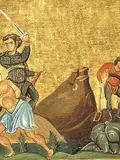
Theopemptos
Martyr, Θεόπεμπτος
St. Theopemptos was a bishop who suffered martyrdom during the persecution of Diocletian at the beginning of the fourth century. Tradition relates that his steadfastness under torture so moved a pagan sorcerer named Theonas that he too confessed Christ, was baptized, and shared in the crown of martyrdom.
Name days: Theopemptos
Synkletike of Alexandria
Holy Woman, Συγκλητική
St. Synkletike was born to a wealthy family of Alexandria in the fourth century. After the death of her parents she gave away her inheritance and withdrew with her blind sister to a tomb outside the city, where a community of women gathered around her.
Name days: Synkletike, Synkletiki, Syncletica, Sygklitiki
Theonas the Martyr
Martyr, Θεωνάς
St. Theonas was a sorcerer who, tradition relates, was sent to poison the Hieromartyr Theopemptos of Nicomedia during the persecution of Diocletian. Seeing the bishop unharmed, he believed in Christ and was baptized.
Name days: Theonas
Romanos of Karpenisi
Martyr, Ρωμανός ο Νέος
St. Romanos was born near Karpenisi and became a monk. Tradition relates that he longed for martyrdom, went to Constantinople, and there openly confessed Christ before the authorities; he was beheaded in 1694.
Domnina the Venerable
Holy Woman, Δομνίνα
St. Domnina is commemorated on January 5 as a venerable woman who lived in asceticism and reposed in peace. The synaxaria preserve little beyond the record of her holy life.
Name days: Domnina
Phosterios the Hermit
Venerable, Φωστήριος
St. Phosterios was a hermit whose name means the light-bearing one. Tradition relates that he lived on a mountain in solitude, was fed by God's providence, and drew many to repentance by his example before reposing in peace.
Gregory of Akrita
Venerable, Γρηγόριος ο εν Ακρίτα
St. Gregory of Akrita was born in Crete in the eighth century and became a monk. After pilgrimage to the Holy Land he settled at the monastery of Akrita near Constantinople, where he lived in strict asceticism through the iconoclast troubles.

The calendar, on your phone each morning
Today’s saints, whether it is a fast day, and the people in your contacts who have a name day. Free, with no ads.