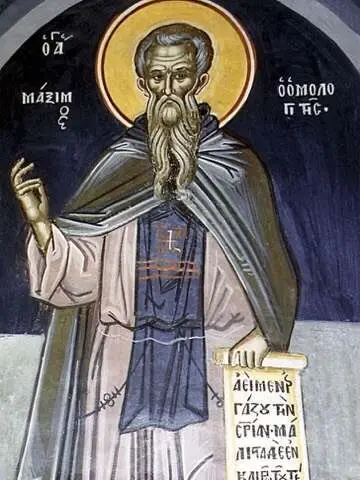
Theologian and confessor who defended Orthodoxy.
January 21
St. Maximos the Confessor was a monk and theologian of the seventh century. Leaving high office in Constantinople for the monastic life, he became the great champion of the truth that Christ, being true God and true man, possesses both a divine and a human will, standing almost alone against the Monothelite heresy supported by emperor and patriarch.
For his confession he was tried, mutilated, and exiled, dying in banishment; the Church soon vindicated his teaching. His profound writings on the spiritual life are treasured to this day. He is commemorated on January 21.
August 13
St. Maximos the Confessor was a monk and theologian of the seventh century. Leaving high office in Constantinople for the monastic life, he became the great defender of the true faith against monothelitism, teaching that Christ, being true God and true man, possesses both a divine and a human will. For refusing to keep silence he was tried, mutilated, and exiled, dying in banishment in 662.
His profound writings on theology and the spiritual life remain treasures of the Church. His principal feast is January 21; on August 13 the Church commemorates the translation of his relics.
Feast day
On the New Calendar, Maximos the Confessor is commemorated on January 21. Churches on the Old (Julian) Calendar keep the feast on February 3 of the civil calendar.
On the New Calendar, Maximos the Confessor is commemorated on August 13. Churches on the Old (Julian) Calendar keep the feast on August 26 of the civil calendar.
Who celebrates a name day
People with these names keep their name day on this feast:
Maximos, Makis, Max, Maksim, Maxim, Maximus
Also commemorated on January 21
Maximos the Greek
Venerable, Μάξιμος ο Γραικός
Venerable Maximos the Greek, Athonite scholar and confessor in Russia.
Eugenios of Trebizond and those with him
Martyr, Ευγένιος Τραπεζούντος
Holy Martyrs Eugenios, Candidus, Valerian and Aquila of Trebizond.
Icon: public domain image from Wikimedia Commons.


The calendar, on your phone each morning
Today’s saints, whether it is a fast day, and the people in your contacts who have a name day. Free, with no ads.