Name days on May 13
Glyceria, Glyceri, Glykeria, Glikeria, Sergios, Sergius, Laodikios, Pafsikakos, Pausicacus
Saints and feasts of May 13
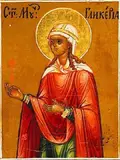
Glykeria
Holy Woman, Γλυκερία
The Holy Martyr Glykeria was a young Christian woman of Thrace who suffered for Christ in the second century. The daughter of a Roman official, she confessed the Lord openly when the pagans of Heraclea gathered for sacrifice, refusing to honor the idols. For this she endured imprisonment and many tortures, and was finally given over to wild beasts, ending her contest with prayer.
Sergios the Confessor
Venerable, Σέργιος ο Ομολογητής
Sergios was a nobleman of Constantinople, related to Patriarch Photios, who lived during the second period of Iconoclasm in the ninth century. For his defense of the icons he was stripped of his property and exiled with his family.
Founders of Iviron: John, Euthymios, George and Gabriel
Venerable, Ιωάννης, Ευθύμιος, Γεώργιος και Γαβριήλ οι Ίβηρες
John, a Georgian nobleman, and his son Euthymios came to Mount Athos in the tenth century and, with the support of Saint Athanasios of the Lavra, founded the Monastery of the Iberians. Euthymios translated the Scriptures and Fathers into Georgian, and George the Hagiorite later continued the work as abbot.
Laodikios the Jailer
Martyr, Λαοδίκιος
Laodikios was the guard of the prison where the virgin martyr Glykeria was held at Heraclea in Thrace. Witnessing her endurance and the wonders that accompanied her sufferings, he confessed Christ himself.
Name days: Laodikios
Pausikakos of Synnada
Hierarch, Παυσίκακος Συνάδων
Pausikakos was born in Apamea in Syria and practiced medicine, healing the sick freely and treating souls as well as bodies. Chosen Bishop of Synnada in Phrygia in the sixth century, he was loved for his charity.
Name days: Pafsikakos, Pausicacus
Monastic Martyrs of Iviron
Martyr, Ιβηρίτες Οσιομάρτυρες
In the late thirteenth century, when the Emperor Michael VIII sought to impose the union with Rome, the monks of Iviron on Mount Athos refused to accept it. Tradition relates that the elder monks were put aboard a ship and drowned in the sea, while the younger were carried off into captivity.

The calendar, on your phone each morning
Today’s saints, whether it is a fast day, and the people in your contacts who have a name day. Free, with no ads.